JM
Tryggve, the AI buddy for safety on the construction site
The worker talks to Tryggve and shows the problem with the phone. Tryggve asks follow-up questions, points out the hazard in the picture and writes the report. The office gets patterns, investigation support and actions. We build Tryggve for and with JM, with AI in the product and AI agents in the development.
- Client
- JM
- Industry
- Construction and property
- Delivery
- App and Web
- Release
- 2026-06-03
The challenge
Construction is one of the industries in Sweden where the most people are injured and killed at work. At the same time, much of what happens on a site is never written down: near misses, risks and small deviations that someone saw but did not have time to report.
That is not surprising. A form at the end of a shift feels like paperwork, not safety. And the reports that do get written often lack what you need to learn something: what happened, why and what could have happened.
JM and Skanska brought the question to the Safe & Healthy Workplace Hackathon in June 2026. How do we get more people to speak up? And how does what they say become useful to those who prevent the next accident?
The solution
Talk instead of filling in forms
The worker presses a button and talks to Tryggve with the camera running. Tryggve answers by voice, asks follow-up questions and marks the hazard in the picture with a circle and an arrow. The location comes from the phone.
When the conversation ends, the report is already written, with incident type, sequence of events, cause, action and a risk class with a justification. The app works in five languages, because a construction site rarely has just one.
The office sees the patterns
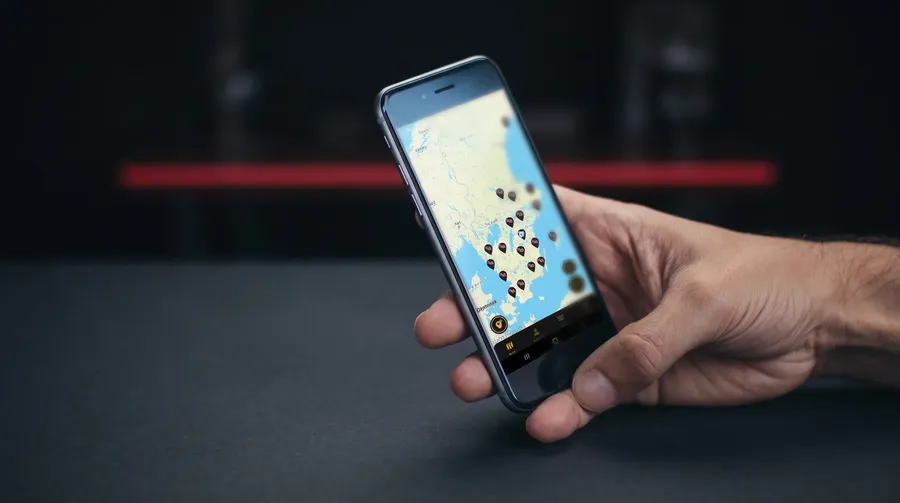
In the office, the reports come together on a map and in an overview with actions, owners and deadlines. Tryggve helps investigate with five whys, people, technology and organisation and the hierarchy of controls. The answers refer to the Swedish Work Environment Authority regulations, so the report speaks the same language as the rules.
Anyone who wants to know more can ask the data in plain words, for example which risks keep coming back when working at height. The server calculates the numbers and the AI writes the answer. Who reported something is never sent to the AI.
AI where it helps, rules where they are enough
The live conversation, the image analysis and the structuring are built on Google Gemini. The shift briefing, the risk analysis and the time series are calculated with plain rules, because they need to be fast and predictable. Every AI call has a fallback. When it is used, the answer says so clearly, so no one mistakes a fallback answer for a real one.
Built with AI agents, steered by us
We built Tryggve with agentic development from day one. Every feature started as a spec in Spec Kit. Then Claude Code wrote the code test first, clicked through the flows in acceptance tests and reviewed every change against OWASP before it could move on. We decided what to build and approved the result.
Since 21 May that adds up to 41 specs, 793 work items, 97 pull requests and 512 commits. That is how we go from idea to a prototype running for real in a few months, without cutting corners on quality.
From hackathon to feasibility study
Tryggve was built for the JM and Skanska challenge at the hackathon. We reached the final, pitched to a jury of companies and came second. In October the feasibility study with JM started, with workshops together with people from production. The prototype now runs for real.
Results
- −50 %in the hackathon final
- 35%specs before the code was written
- 20× snabbarereviewed pull requests
Skanska och JM bekräftar att Tryggve redan levererar värde — snabbare rapportering, högre kvalitet och färre återkommande tillbud.